


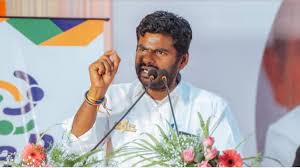
 Tamil Nadu BJP president Annamalai stated that the “One Nation, One Election” policy is not a new initiative by the BJP but a revival of a practice that existed in the past. He remarked that the criticism from AIADMK leader Palaniswami reflects the growing challenges posed by BJP’s development agenda.
In a press briefing held in Chennai, Annamalai said:
“Prime Minister Modi has introduced two bills in Parliament regarding ‘One Nation, One Election.’ The BJP has consistently advocated for this policy.
In India’s first general election in 1952, there were 494 MPs. Based on the 1971 census, the number increased to 543 MPs, which remains unchanged to date. This arrangement was extended in 2021, and the tenure is set to end in 2026.
According to the bill introduced by the BJP, after 2029, all state assembly elections will be synchronized with the Lok Sabha elections. The Tamil Nadu assembly elections will occur in 2026, and the winning party will govern until 2031. In Tamil Nadu, “One Nation, One Election” will be implemented starting from 2034.
The first four general elections in India were conducted under the “One Nation, One Election” framework. The disruption began due to the Congress party’s actions during its central rule, especially in 1967 and 1969, when it toppled state governments.
Annamalai emphasized that the policy will not harm any ruling party. “This initiative does not target anyone. The late Tamil Nadu Chief Minister Karunanidhi himself acknowledged that implementing ‘One Nation, One Election’ would lead to national progress,” he added.
He concluded by stating that the proposed policy aims to foster development across the country without adversely affecting any political party.