


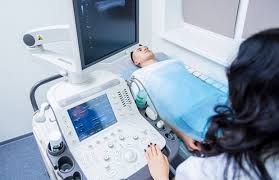
 Biopsies guided by high resolution ultrasound are as effective as those using MRI in diagnosing prostate cancer, an international clinical trial has shown.
The technology, called micro-ultrasound, is cheaper and easier to use than MRI. It could significantly speed up diagnosis, reduce the need for multiple hospital visits and free up MRI for other uses, researchers say.
The results of the OPTIMUM trial were presented at the European Association of Urology Congress in Madrid and published in JAMA.
OPTIMUM is the first randomized trial to compare micro-ultrasound (microUS) guided biopsy with MRI-guided biopsy for prostate cancer. It involved 677 men who underwent biopsy at 19 hospitals across Canada, the U.S. and Europe. Of these, half underwent MRI-guided biopsy, a third received microUS-guided biopsy followed by MRI-guided biopsy and the remainder received microUS-guided biopsy alone.
MicroUS was able to identify prostate cancer as effectively as MRI-guided biopsy, with very similar rates of detection across all three arms of the trial. There was little difference even in the group who received both types of biopsies, with the microUS detecting the majority of significant cancers.
Around a million prostate cancer biopsies are carried out each year in Europe, a similar number in the U.S. and around 100,000 in Canada. The majority of biopsies are conducted using MRI images fused onto conventional ultrasound, as this enables urologists to target potential tumors directly, leading to more effective diagnosis.