


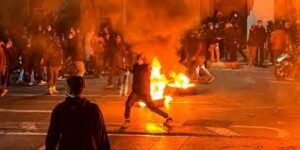
 Washington, Jan 13: US President Donald Trump said Iran wants to negotiate with Washington following his threat to strike the Islamic Republic over its violent suppression of nationwide protests.
The remarks come as activists reported that at least 544 people have been killed during demonstrations across Iran. Tehran did not directly respond to Trump’s comments, though Iranian officials signaled conditional openness to diplomacy.
Trump’s statement followed a visit by Oman’s foreign minister to Iran. Oman has historically served as a diplomatic intermediary between the US and Iran.
However, it remains unclear what concessions Iran could offer, especially given Trump’s strict demands regarding Tehran’s nuclear program and ballistic missile development.
Iranian Foreign Minister Abbas Araghchi said the situation inside the country was “under total control,” blaming Israel and the United States for the violence without presenting evidence.
He claimed protests were intentionally turned violent to justify possible US intervention.
His comments were broadcast by Al Jazeera, which continues to report live from Iran despite a nationwide internet shutdown.
Despite the rhetoric, Araghchi said Iran remained “open to diplomacy.”
Iranian Foreign Ministry spokesman Esmail Baghaei echoed this, stating that communication channels with the US remained open but warning that talks must be based on “mutual interests,” not unilateral demands.
On Monday, Iranian authorities mobilized tens of thousands of pro-government demonstrators in Tehran and other cities in a show of strength. State television broadcast chants of “Death to America” and “Death to Israel.”
Iran’s attorney general warned that protesters could face charges such as “enmity against God,” offenses that carry the death penalty.
Meanwhile, Trump and his national security team weighed possible responses, including cyberattacks or military strikes.
Trump warned Iran of unprecedented retaliation if it attacked US or Israeli targets, while also claiming that Tehran had contacted Washington to arrange talks.
According to the US-based Human Rights Activists News Agency, more than 10,600 people have been detained during the two weeks of unrest.
Of the 544 reported deaths, 496 were protesters and 48 were members of security forces.
With Iran’s internet and phone networks largely shut down, independent verification of the figures has been difficult, and the Iranian government has not released official casualty numbers.
Fear and Information Blackout in Tehran
Residents of Tehran described an atmosphere of fear, with streets emptying after evening prayers.
Authorities sent text messages warning families to keep young people off the streets and threatening severe consequences for participation in protests.
The demonstrations began on December 28, initially over the collapse of the Iranian rial, and later evolved into direct challenges to the rule of Supreme Leader Ayatollah Ali Khamenei amid worsening economic conditions.