


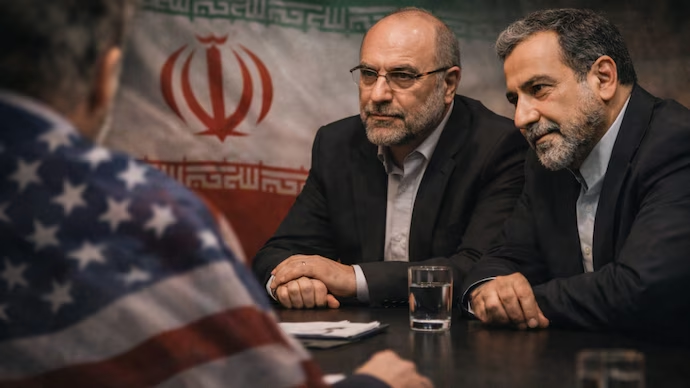
Negotiators from Iran and the United States are preparing for high-level talks aimed at reinforcing a fragile ceasefire, even as tensions continue to simmer across the Middle East.
The truce remains uncertain, with ongoing exchanges of fire between Israel and Hezbollah raising fears that the situation could quickly escalate again.
Iran has indicated that the planned talks may not go ahead unless Israel halts its military operations in Lebanon. At the same time, US President Donald Trump has criticized Tehran for restricting the flow of ships through the Strait of Hormuz, a vital global oil route through which a significant share of the world’s oil supply passes.
Kuwait has also reported a drone attack it blames on Iran and its regional allies, though Iran has denied responsibility. Despite these developments, diplomatic efforts are still moving forward.
US Vice President JD Vance expressed cautious optimism, saying that negotiations could be positive if Iran engages sincerely.
Parallel talks between Israel and Lebanon are also expected to begin soon in Washington, after Israeli Prime Minister Benjamin Netanyahu authorized discussions aimed at disarming Hezbollah and potentially improving relations between the two countries.
However, the continued Israeli strikes in Lebanon, including a particularly deadly wave of airstrikes in Beirut, have complicated the path to peace.
Hezbollah has yet to clearly state its position on the proposed negotiations, adding further uncertainty.
Civilians in Lebanon continue to bear the brunt of the conflict, with heavy casualties and widespread displacement reported.
Meanwhile, Iran’s control over the Strait of Hormuz remains a key point of leverage, disrupting global oil shipments and pushing prices higher.
Disagreements over Iran’s nuclear program also persist, with the US seeking strict limits while Iran insists on its right to enrich uranium for peaceful purposes.
With thousands of people killed across the region, the ceasefire remains highly fragile and the prospects for lasting peace uncertain.
JD Vance warned Tehran not to “play” the United States as he departed for Islamabad to lead high-stakes negotiations aimed at ending the ongoing war with Iran.
Speaking before boarding Air Force Two, Vance expressed cautious optimism about the talks but stressed that progress would depend on Iran negotiating in good faith.