


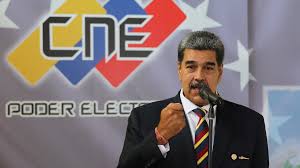
 Venezuela, July 29: In a dramatic and pivotal presidential election held on July 28, 2024, Venezuelans are choosing between extending President Nicolás Maduro’s rule or ushering in a new chapter under his main challenger, Edmundo González. The election, which could dramatically reshape the country’s future, comes amid severe economic hardship and widespread discontent.
Polling stations across Venezuela opened at 6 a.m., with voters forming long lines well before dawn. The atmosphere was charged with both hope and frustration as citizens prepared to cast their ballots. Alejandro Sulbarán, 74, who queued from the previous evening, expressed the widespread sentiment: “We are all here for the change we want.”
Venezuela’s economic crisis, marked by hyperinflation surpassing 130,000%, has led to widespread shortages and a dramatic decline in living standards. With over 17 million eligible voters, the high turnout underscores the urgency of the situation for many Venezuelans.
Incumbent President Nicolás Maduro, 61, is seeking another six-year term. Despite his administration’s claims of economic stability and progress, many Venezuelans remain skeptical, citing persistent poverty and corruption. Maduro’s campaign has highlighted a modest economic recovery, with predictions of a 4% growth rate for 2024, yet daily hardships persist for most citizens.
Challenging Maduro is Edmundo González, representing a coalition of opposition parties. González, selected as a last-minute substitute for María Corina Machado, who was barred from the election, has promised significant reforms. His campaign has resonated with voters seeking change, focusing on economic recovery and social justice.
After voting, Maduro pledged to respect the election results, urging all candidates to do the same. “No one is going to create chaos in Venezuela,” Maduro asserted. His campaign has struggled to counteract widespread criticism and voter dissatisfaction.
González, meanwhile, appealed to voters with a message of hope and renewal. “We will change hatred for love, poverty for progress, and corruption for honesty,” he declared. His campaign has been marked by emotional rallies and promises to address the deep-seated economic issues plaguing the country.
The international community is closely watching the election, which could have broad implications for regional stability. Economic sanctions imposed by the U.S. and other countries have exacerbated Venezuela’s crisis, and the outcome of this election may influence future international relations and economic policies.
As votes are cast, Venezuelans are expressing a strong desire for change. Many have endured years of economic hardship and are hoping this election will bring an end to their struggles. “If González loses, I will ask my relatives in the U.S. to help us emigrate,” said Liana Ibarra, a Caracas manicurist who waited hours to vote.
The results of the election, which are expected later today, will be pivotal in determining Venezuela’s path forward. The stakes are high, and the global community remains attentive as the nation faces one of the most critical moments in its recent history.