


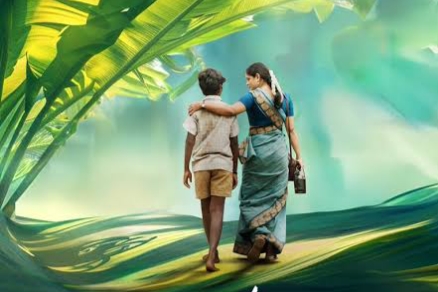

Mari Selvaraj, who made a strong impact in Tamil cinema with films like Pariyerum Perumal and Karnan, returns with his latest directorial venture Vazhai. Known for his poignant explorations of caste oppression, Selvaraj once again tackles a real-life incident, this time through the innocent yet profound perspective of schoolchildren. But has he succeeded in conveying his message effectively? Let’s dive in.
Set against the backdrop of Tirunelveli, much like his previous films, Vazhai follows the story of a young schoolboy, Sivanandham, who is the central character. Along with his friend Sekhar, Sivanandham spends his school holidays working as a banana stem carrier, a job they are reluctant to do. The film beautifully portrays Sivanandham’s school life, his family dynamics, his aspirations, and the events of one particular day when he decides not to go to work—a day that changes everything.
Mari Selvaraj meticulously recreates the 1997-1998 period, bringing the era to life in a way that is both nostalgic and haunting. The film opens with scenes that vividly depict the rural landscape of the southern districts. Unlike the typical portrayal of lush fields, Selvaraj shows us the reality of a dry village, marked by withering plants and dusty paths, instantly transporting the audience into the heart of the story.
The film largely hinges on the performances of the child actors, Sivanandham and Sekhar, who bring a natural charm to their roles. Their playful antics provide moments of genuine laughter, especially a scene where they imitate Kamal Haasan’s comedy, drawing cheers from the audience. The first half of the film primarily focuses on school life, which, although it could have been tighter, still resonates due to its authentic portrayal of rural childhood.
Nikhila Vimal, who plays the role of the teacher, delivers a standout performance. Her portrayal of a kind-hearted teacher evokes memories of that one beloved teacher we all had in school. Her dance to a “Panchumittai” song in a traditional saree is especially delightful and adds a light-hearted touch to the narrative.
The supporting cast also deserves praise. Kalaiyarasan, who plays Kani, may not dominate the screen time, but his portrayal of a young man fighting for his rights is compelling. Divya Duraisamy, as Sivanandham’s caring sister Vembu, brings warmth and depth to her role.
The second half of the film is where Vazhai truly finds its strength. The tension builds as Sivanandham prepares for his school’s annual day dance performance, only to face unforeseen challenges. The events that unfold shock not just the protagonist but the entire village, leaving a lasting impact on the viewers. The climax is particularly unexpected and emotionally charged, bringing tears to many. By subtly including references to Dr. Ambedkar, Selvaraj emphasizes the importance of understanding his legacy and the relevance of his teachings in contemporary society.
Santhosh Narayanan’s music is a significant asset to the film, enhancing its emotional depth and adding to the overall impact.
In conclusion, Vazhai is a powerful film that continues Mari Selvaraj’s exploration of caste and social injustice, this time through the eyes of children. While it might require some patience, especially in the first half, the film’s compelling narrative, strong performances, and poignant message make it a must-watch. Mari Selvaraj once again proves why he is one of Tamil cinema’s most important contemporary