


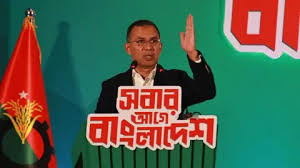
 Dhaka, Feb 16: Bangladesh’s new political leadership has called for a reset in relations with India following the Bangladesh Nationalist Party’s (BNP) sweeping victory in the parliamentary elections.
Humayun Kabir, adviser to BNP Chairman Tarique Rahman, said Dhaka wants to rebuild ties with New Delhi on a “fresh footing” now that former prime minister Sheikh Hasina and her Awami League are no longer in power.
Rahman’s BNP secured more than a two-thirds majority in Thursday’s landmark polls.
In an interview to PTI Videos, Kabir stressed that India must recognise the changed political reality in Bangladesh after what he described as a clear public mandate in favour of the BNP.
He said a shift in “mindset” was required in India, arguing that the Awami League no longer represents Bangladesh’s political landscape.
Kabir was sharply critical of Hasina, who fled to India following the August 2024 uprising, blaming her for the deaths of over 1,500 people and describing her as responsible for grave violence.
He urged the Indian government to ensure that its territory is not used by Hasina or other Awami League figures in ways that could destabilise Bangladesh.
India, he said, must avoid any perception of complicity in activities that undermine Bangladesh’s sovereignty.
Once these concerns are addressed, he added, normal diplomatic cooperation can resume, emphasising that the two neighbours should work together for mutual benefit.
India said in November 2025 that it is examining a request from Bangladesh’s interim government to extradite Hasina.
The Ministry of External Affairs reiterated its commitment to the best interests of the Bangladeshi people, including peace, democracy, inclusion and stability, and said it would continue constructive engagement with all stakeholders.
Kabir also highlighted a recent cordial phone conversation between Prime Minister Narendra Modi and Rahman, during which Modi invited Rahman to visit India at a convenient time.
However, Kabir indicated that domestic priorities would take precedence.
Rahman, he said, would first focus on steering Bangladesh toward prosperity and economic security before undertaking international engagements, including a possible visit to India.
On foreign policy, Kabir said the new government would pursue balanced relations amid growing competition among India, China and the United States in South Asia.
Bangladesh would negotiate from a position of strength, backed by a strong electoral mandate, with national interest and territorial well-being at the centre of its diplomacy.
He emphasised that Dhaka would not align exclusively with any single country and would avoid public disclosures on agreements, underscoring a pragmatic and sovereign approach.
Addressing concerns over minority safety, particularly regarding Hindus, Kabir rejected claims of widespread communal violence.
He noted that even during the five days of political vacuum after the August uprising, minorities were not attacked, which he said demonstrated communal harmony.
India has, however, raised concerns about attacks on minorities in recent months.
Kabir also called for enhanced regional cooperation on counter-terrorism, including intelligence sharing among elected governments to track extremists and build trust.
He reiterated that a BNP-led government would prioritise peace, prosperity and integrated economic and security cooperation, positioning Bangladesh as a strategic conduit for broader regional ties.