


Tehran, Apr 18:
Iran announced on Friday that the Strait of Hormuz is now “completely open” to all commercial vessels for the duration of the Lebanon ceasefire, a move welcomed by Donald Trump.
Iranian Foreign Minister Abbas Araghchi said the reopening aligns with the 10-day ceasefire between Israel and Lebanon, though ships must follow designated routes set by Iran’s Ports and Maritime Organisation.
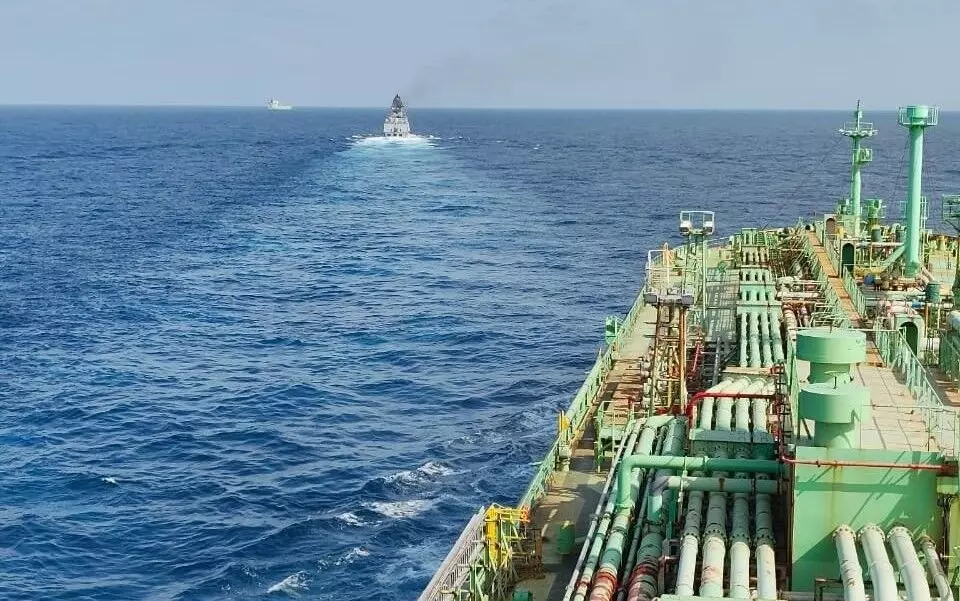
The Strait of Hormuz, a critical global oil transit route, had been effectively blocked by Iran during its conflict with the United States and Israel, contributing to major disruptions in global energy supplies.
While Trump praised the reopening and described the waterway as “ready for business,” he emphasized that the US naval blockade targeting Iran would remain in place until a comprehensive peace agreement is finalized.
He expressed confidence that negotiations are close to completion, noting that most key issues have already been agreed upon.
The reopening comes amid intensified diplomatic efforts to end the broader conflict.
Pakistan has emerged as a central mediator, with its Chief of Defence Forces, Field Marshal Asim Munir, leading a high-level delegation to Tehran.
During the visit, Munir met Iranian President Masoud Pezeshkian, Parliament Speaker Mohammad Bagher Ghalibaf, and senior commanders of the Islamic Revolutionary Guard Corps.
Discussions focused on steps toward ending the war, ongoing negotiations, and prospects for regional stability.
Munir’s visit, the first by a foreign military leader since a temporary US-Iran ceasefire began, is believed to have included delivering messages from Washington and coordinating the next phase of talks.
Iran has urged the US to remain committed to any peace agreement, particularly in the context of the Lebanon ceasefire. Pakistan is now preparing to host a second round of high-stakes negotiations between the US and Iran, expected in the coming week.
The first round of rare direct talks, held in Islamabad, ended without agreement but laid the groundwork for continued diplomacy.
Officials report heightened preparations, including large-scale security deployments in Islamabad and Rawalpindi, with potential travel restrictions in place to manage the expected influx of delegations and ensure safety.
Prime Minister Shehbaz Sharif has also been actively involved in diplomatic efforts, engaging with leaders from Saudi Arabia, Qatar, and Turkey.
In Antalya, he met US official Massad Boulos to discuss regional developments and Pakistan’s role in facilitating dialogue.