


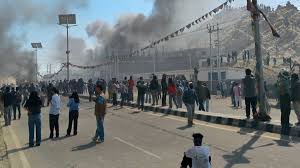
 An uneasy calm prevailed in Ladakh on Thursday as police and paramilitary troops strictly enforced a curfew in Leh town, a day after clashes between security personnel and protesters demanding statehood and constitutional protection left four people dead and more than 80 injured.
At least 50 people have been detained so far in connection with the violence that broke out on Wednesday during the shutdown called by Leh Apex Body (LAB) to demand an extension of the Sixth Schedule and statehood for Ladakh.
The protesters, according to officials, indulged in arson and violence, with mobs burning the BJP office, a number of vehicles, and ransacking the Hill Council headquarters.
“The situation in the curfew-hit areas is under control. There are no incidents to report from anywhere,” a police officer told PTI, confirming the detentions.
The escalation of violence had led climate activist Sonam Wangchuk to abandon his fortnight-long hunger strike, which he was undertaking in favour of the demands. Wangchuk has denounced the violence.
“This is the saddest day for Ladakh…the path we are treading for the last five years was peaceful,” Wangchuk said, appealing to the youth to “stop the violence forthwith as it only causes harm to our cause”.
The Centre, however, blamed the activist for the unrest, alleging that the mob violence was guided by his “provocative statements” and claiming that “politically motivated” people were unhappy with the progress of ongoing talks between the government and Ladakhi groups.
The Union Home Ministry, which reiterated its commitment to providing “adequate constitutional safeguards,” also noted that police are probing the possible involvement of foreign hands, citing that three of the injured were Nepalese citizens.
Wangchuk termed the home ministry’s allegations against him as a “scapegoat tactic” intended to avoid dealing with the Himalayan region’s core problems.
Reacting to the MHA’s statement that had blamed him for provoking the mob violence, Wangchuk said he is prepared to be arrested under the stringent Public Safety Act (PSA).