


Washington, May 7:
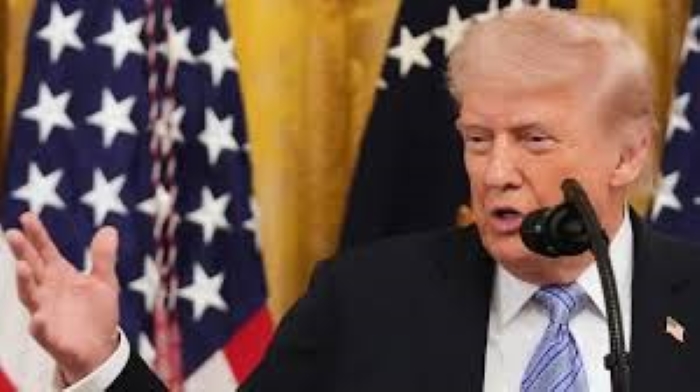
The United States, under President Donald Trump, has intensified pressure on Iran, warning of renewed bombing if Tehran does not reopen the strategically vital Strait of Hormuz.
Trump made the threat in a social media post, suggesting that while a potential agreement to end the ongoing conflict may be close, failure by Iran to accept it would lead to immediate military escalation.
He also indicated that reopening the strait could allow oil and natural gas shipments to resume, stabilizing disrupted global energy markets.
The tensions come amid broader diplomatic efforts to end the war involving Iran, the United States, and Israel, which began on February 28.
A fragile ceasefire has largely held, though sporadic clashes have occurred, particularly during recent US operations aimed at reopening the strait. Iran’s effective blockade has stranded hundreds of commercial vessels in the Persian Gulf, severely impacting global trade and driving up fuel prices.
Meanwhile, China has stepped into a potentially influential diplomatic role. Chinese Foreign Minister Wang Yi met with Iran’s Foreign Minister Abbas Araghchi in Beijing, calling for an immediate and comprehensive ceasefire.
Wang emphasized that continued conflict is unacceptable and has already caused significant harm to both Iran and global stability. China’s longstanding economic and political ties with Tehran position it as a key intermediary, and the Trump administration has urged Beijing to use its influence to push Iran toward reopening the strait.
Araghchi, on his first visit to China since the conflict began, discussed not only the strait but also Iran’s nuclear program and the impact of international sanctions.
He claimed that Iran’s position on the global stage has strengthened during the conflict, highlighting its resilience and capabilities.
In Washington, US Secretary of State Marco Rubio expressed hope that China would pressure Iran to change course. Rubio criticized Iran’s actions in the strait, arguing they risk isolating the country internationally.
China, however, has maintained a more balanced stance, urging all parties to act with restraint and resolve disputes through dialogue while reaffirming Iran’s right to peaceful nuclear energy.
On the military front, the US had launched “Project Freedom” to escort stranded ships through the strait, even engaging Iranian vessels that posed threats.
However, Trump announced a pause in this operation, citing progress in negotiations and requests from mediators including Pakistan.
Pakistan has played a key role in facilitating dialogue between Washington and Tehran. Pakistan’s Prime Minister Shehbaz Sharif welcomed the pause, expressing optimism that it would support ongoing peace efforts.
He reiterated Pakistan’s commitment to diplomacy and regional stability.
The economic impact of the crisis remains significant.
Although global oil prices have eased slightly—Brent crude dropping to around $100 per barrel—they remain far above pre-war levels of roughly $70.
The disruption in the Strait of Hormuz, through which a major portion of the world’s energy supplies flows, continues to rattle global markets and place pressure on major economies.
Looking ahead, diplomatic efforts may intensify, especially with Trump scheduled to visit Beijing for a summit with Chinese President Xi Jinping on May 14–15.
The meeting could prove pivotal in shaping the next phase of negotiations and determining whether the conflict moves toward resolution or further escalation.